Faceted browsing of Geograph images in Flamenco!

January 16th, 2010

Totally accidently, via a recent Ask-Slashdot post looking for a Search Engine interface, happened across Flamenco search interface framework. It didn’t suit the asker, but its pretty close to great for Geograph, which has lots of categorization. I’ve been looking to build something like this, and have been slowly building the components, scattered around the Geograph website, but havn’t had the time and dedication to pull together. However this interface, does lots and creates a single consistent interface for browsing geograph images, by browsing multiple dimensions of data.

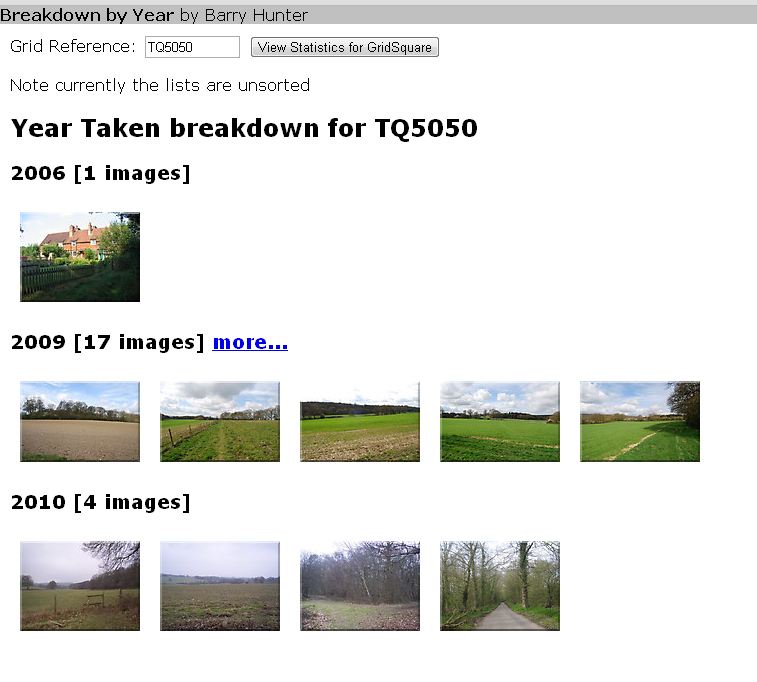
Flamenco screenshot

After a few stumbling blocks getting the python application running on my server (a python noob), set about importing a sample of the Geograph Archive. And frankly the results are nothing short of amazing – esp considering this is the venilla application, next to no customization for Geograph was needed. Try it out by clicking on the screenshot above, or here, wont say too much about how to use it, but its pretty intuitive. Or Direct link to an example results page

Really want to get it going on the whole Geograph archive (1.6 million photos plus) – have a few doubts about running that on my own little server, but definitely going to work towards that.

UK Onshore geology maps 1:50 000 scale in Google Earth

January 3rd, 2010

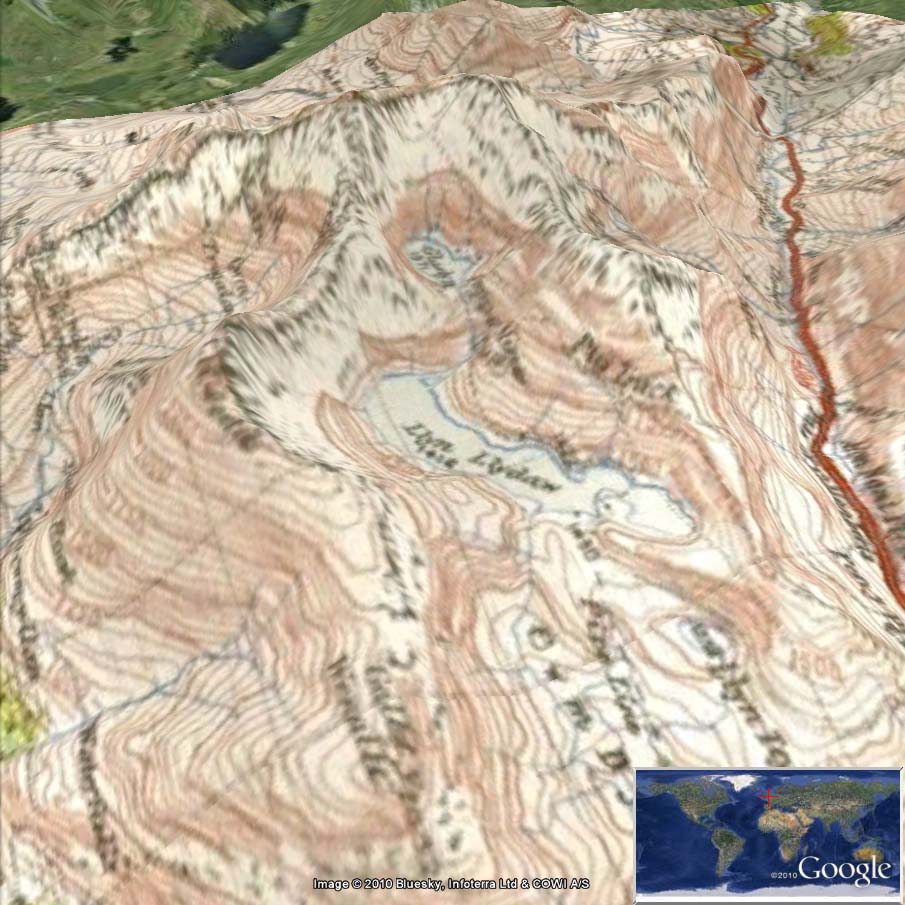
The BGS recently publised the Geology of Britain website, which makes available a Geological map of Great Britain online in an interactive Map Viewer. They make available a 1:625 000 scale layer for Google Earth, and a the 1:50 000 scale version via WMS only.

Unfortunatly the WMS doesnt play nicely in Google Earth for some reason, so here is a hand tuned Google Earth layer to display the 1:50 000 scale Geological Maps:

http://gokml.net/2sc.kml

Enjoy!

The Google Earth/Maps Terms of Service

December 17th, 2009

Slashgeo has been for the last few months running a poll on users acceptance of the Google Earth/Maps TOS. The poll has now been closed and the results published.

Pretty interesting, aside from the tidbit that most people don’t read the TOS, the number of people actively put off by them is quite high!

I think most of the ‘issue’ comes from the fact that the Universal Terms applies to users, use of both products. In part 11.1. it says “By submitting, posting or displaying the content you give Google a perpetual, irrevocable, worldwide, royalty-free, and non-exclusive licence to reproduce, adapt, modify, translate, publish, publicly perform, publicly display and distribute any Content which you submit, post or display on or through, the Services.

- which to my non-legal mind means Google can take a copy of any data you display in Google Earth or Google Maps – and do what they like with it. It’s irrevocable remember.

On the whole don’t have an issue with this for Google Maps – you pretty much understand you posting public data there. But for Google Earth – which is an application on your own computer – you expect data you display there to NOT be shared with Google and its partners.

Now I am not saying Google will invoke this right and take a copy of your data, its questionable if they would want to, as the data probably lacks context, and there is probably a large amount of it. But they could if the wanted to. And the fact they chosen not to revoke this right, suggests they wanting to leave their options open.

(The Google Maps API has a different TOS, which doesnt encompass the universal terms, so a developer doesnt have to give up a copy of their data unless they choose to)

via Slashgeo

Google powers your GeoDatabase

December 13th, 2009

Update: Dec 16th, Offical Blog post is out. And just for interest a TechCrunch post too.

Sometime recently* Google has added ‘geo-filtering’ and attribute filtering to the Google Maps Data API, I haven’t seen any announcement of this or other mention (if it was, it was below my radar), other than a tiny footnote in an Article about doing geo-queries on AppEngine.

Anyway for people not aware of the Google Maps Data API, its basically a programmatic access method to the ‘My Maps’ feature of Google Maps. So with the API you can use Google Maps as your Geo-Database. (Subject I believe to a limit of 10,000 features per ‘Map’, but can have many maps)

However it wasn’t all that useful, as all you could do was inject your data, or read it all back. But now that searching and filtering is possible, it makes the API a viable method store your data for a Google Maps API or similar mashup. As soon as you get beyond a trival number of markers, you need to store your data in a database, and being able to only fetch the features in the current viewport is a good way of only working with a small subset at once.

Curouslly, there doesn’t seem to be a ‘limit’; so a big bounding box, could potentially still access many features. But hopefully that will be rectified soon.
Update2: Seems there is a max-results : handy!

Google Earth – sans GoogleUpdate!

December 8th, 2009

I not sure how new this is, but something I only just noticed…

Google now (officially) offers to install Google Earth without the dreaded GoogleUpdate!

It’s only offered when clicking the small ‘advanced setup‘ link on the main Download Earth page. But I think that is ok, using the updater is probably a sensible default, most people will get along just fine with auto-updating. What I have long bemoaned is there was no official way to opt out for people needing or wishing to.

Here’s that link again just in case:

Advanced Google Setup

Thank You Google!

Geograph Images + Google Maps + Geocubes

December 6th, 2009

Geograph Images as you Drag - Screenshot
Quite pleased with the latest update to the Geograph Clusters Map. This displays all geograph images on a interactive draggable Google Map. The clustering is powered by Geocubes :) .

However the most exciting part of the update, is the ‘Enable Photo Display’ button. Which once clicked, enables loading a selection of thumbnails as you drag and move the map. Zoom in close enough to see many blue pins for best effect. As you move again, more images will load; the ones shown should always be within the current map view. The data to show images again comes from the Geocubes API, although we load actual thumbnails via our own API.

For Developers – download the (whole) Geograph Database

October 12th, 2009

Geograph is steadily amassing a huge amount of data, and due to the fact that we require images to be Creative Commons Licensed, we release the whole Archive under such a licence, for just about any use people can think of.

Now we have always been more that happy to produce and give out bulk dumps on demand to anyone who asks, we provide a live API, and even bittorrent based downloads of the images themselves (although admittedly they are a bit behind schedule!).

So in an effort to make it even quicker to get going on new ideas, we have began to put together a self service bulk data download site. So from the following page you can access MySQL dumps of the whole image database, as well as supplementary data such as extracted terms and words – ideal for making search engines and mashups, of course includes the full geographical locational data of the images.

data.geograph.org.uk/dumps

The only caveat is the data doesn’t include enough info to build a link to the image file on our servers. We are doing this because we don’t want to make it easy for people to spider large quantities of images, however contact us and we will see what we can do… we are normally happy to allow hotlinking of thumbnail images as long as we know about it.

This is only the beginning so let us know about your suggestions!

Pretty Map!

September 6th, 2009

One of the things we been looking recently on Geograph, is guageing how ‘recent’ our coverage actually is. We impose no restriction on when photos where taken – because historical images are useful – not to mention every photo is historic by definition as soon as its taken!
'Age Map'
Anyway the point of this post is in the process decided to try plotting a map showing the ‘age’ of the latest photo in a square – to see that recentness. The result is here:

OMG, quite aside from what it shows, it looks beautiful. (To my untrained eye!)

Click the image for a glorious 1px per km version.

© Copyright 2009 Geograph Project and licensed for reuse under this Creative Commons Licence. (if you want to do anything with it!)

Key: Age less than in years: (0 means no photos yet)
geograph 'depth map' key

There is also a whole series of rendered maps from the project.

Scenicness Map of Great Britain

August 21st, 2009

This was made a while ago, but never really publised – so time it was given a bit more exposure…

Thanks to the thousands of people rating locations over at ScenicOrNot, and the fact those locations are tied to Geograph images, we can plot the scenicness on a map!

Screenshot of ScenicOrNot data plotted on the Geograph Interactive Mapper

ScenicOrNot based map


The interactive mapper on Geograph now has a ScenicOrNot layer – updated weekly. You can also use the mapper to view the projects coverage so far.
Click the thumbnail to see the map for an area just south of Edinbrough, drag the map for other areas :) . The lighter the colour the more scenic.

Geocube Geograph Clusters in Google Earth – part 2

July 15th, 2009

Now ready with the next version of the Geograph Google Earth Clusters layer mentioned yesterday.

Google Earth Layer Geograph Google Earth Clusters

It’s the same download link, if you already have a copy, just right click and select Refresh on the “Geograph Google Earth Clusters” feature.

This has a number of advancements:

  • Filterable – click the main title in the Places panel to open configuration options in the popup balloon. Includes options to filter by keyword or Geograph contributor. (Requires Google Earth version 5)
  • Cubes/Cloud – Geocubes offers two clustering options, can how choose between then on the same popup as above
  • Thumbnails – Now shows a image thumbnail in the placemark balloons.
  • Shows a few coarse clusters when not zoomed on the British Isles
  • Source code available! Download the GPL licenced PHP source code here

But its not all rosey – this version seems to suffer from an annoying bug, when first loads sometimes the layer ‘freezes’ and doesnt automatically update as you move around. If that happens right click on the ‘Clusters’ feature in ‘Places’ and select Refresh, doing that once seems to fix it!

Thanks to Geocubes to the amazing service that powers this – highly recommended if you have larger numbers of features to display!